Personal systems

Writing style system

Your voice captured in files — rhythm, phrases to avoid, samples of your own writing — loaded before AI drafts anything in your name.

What it does

You dictate a thirty-second voice note; a clean draft comes back sounding like you wrote it. Before a word gets drafted, the AI loads your voice from files — a guide built from your own published writing, the rules for the platform, and a list of the phrases and patterns that give AI writing away — and every draft is checked against them before you see it.

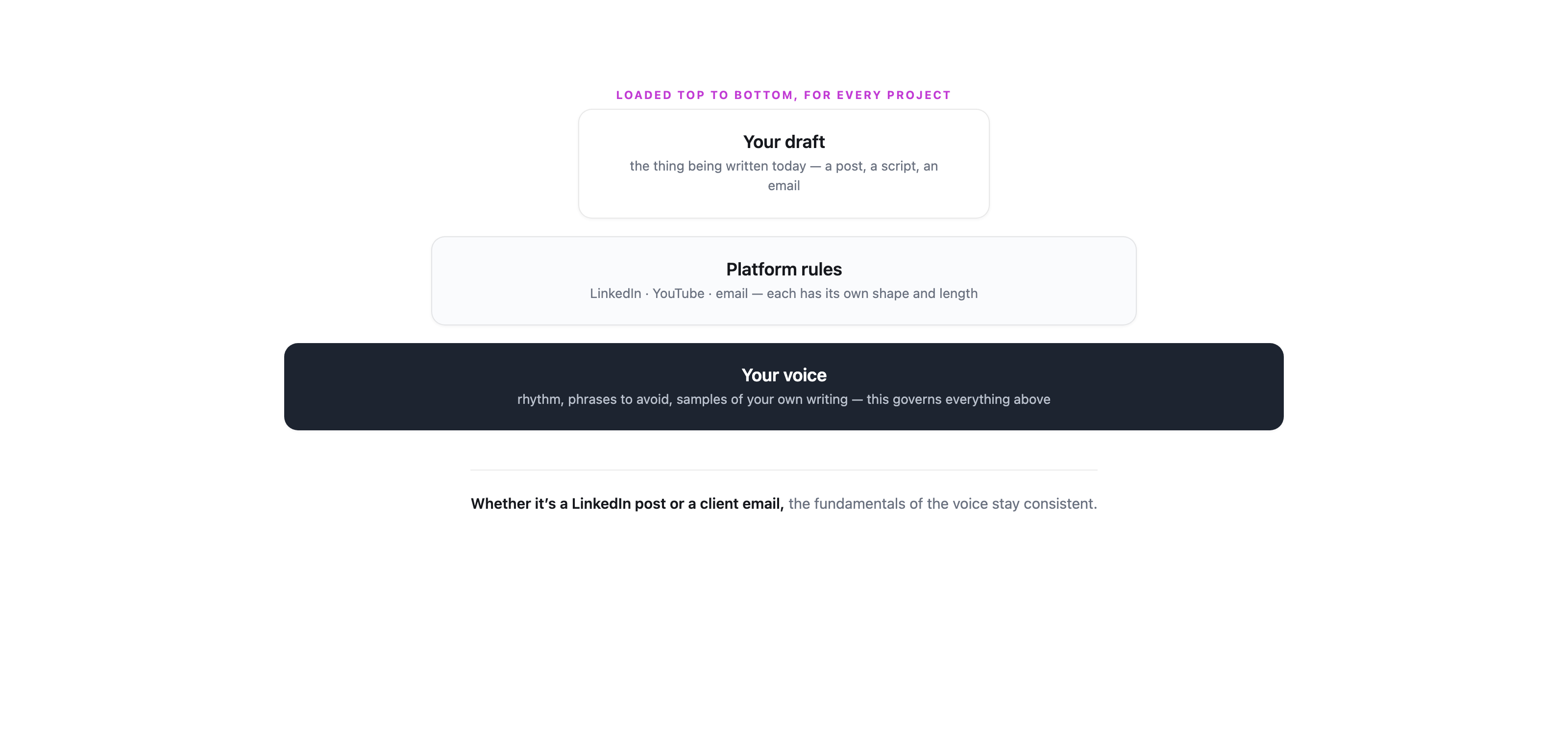
Three layers loaded for every piece: the piece, platform playbooks, voice fundamentals
How it works
Your writing style lives in files. Rhythm, phrases and patterns to avoid, and samples of your own writing — with the freshest published pieces outranking every older sample.
Each platform has its own rules. A LinkedIn post, a YouTube script, and an email differ in shape and length — the voice underneath stays consistent.
Your own words come first. If a recording of you talking about the topic exists — or something you already wrote about it — the draft gets built from your wording, not written fresh and styled afterward.
A second pass checks every draft. A separate reviewer scans for the phrases and patterns to avoid first, then reads for voice. You only see drafts that pass.
Corrections become permanent rules. Flag a phrase once and it joins the avoid list — checked on every future draft without another mention.
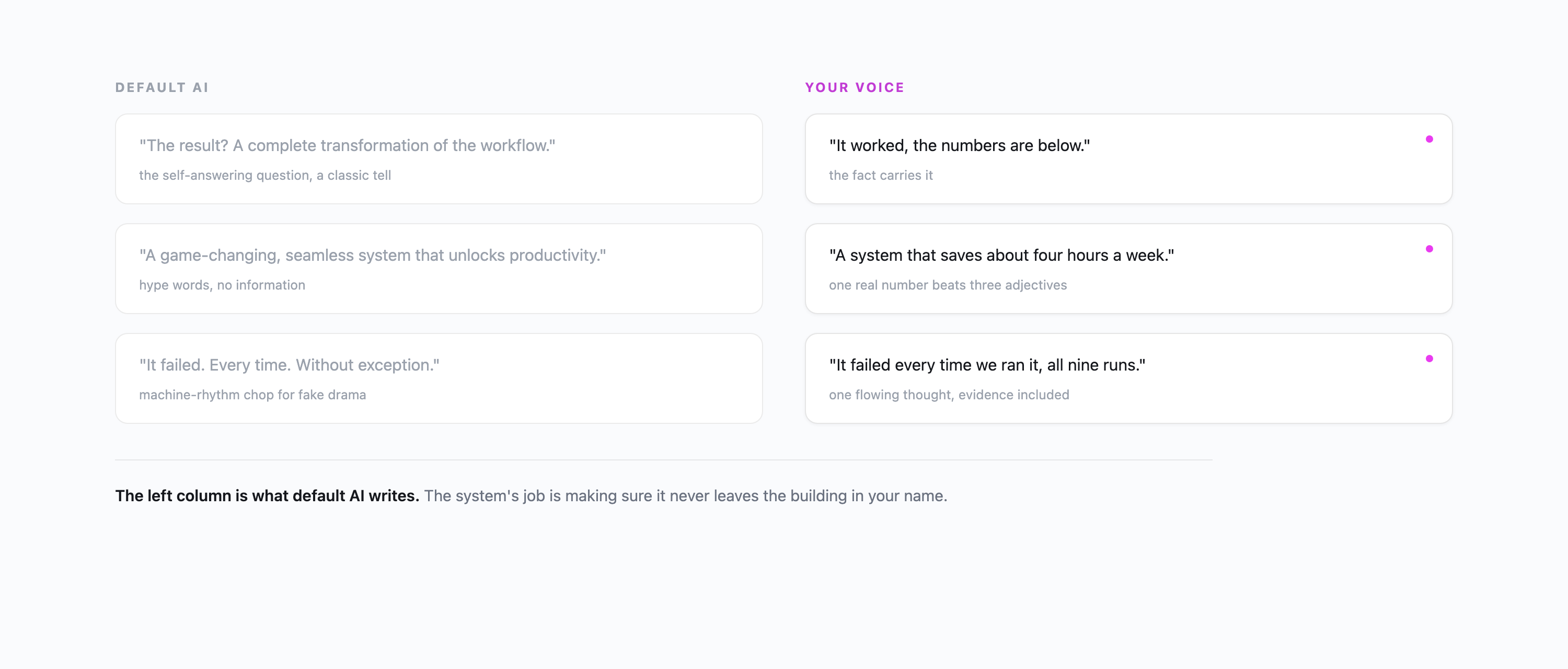
The same point written twice: default AI on the left, the corrected voice on the right
See the other builds

Pricing teardown

Grades pricing pages against a pricing expert’s rubric and ranks a whole market in one table.

See more →

Automated style guide

Writes your style guide from your published articles and reviews every new draft against it.

See more →

B2B conference intelligence

Ranks every conference on your calendar and tells you which ones are worth the budget — all of it verified.

See more →

Shared AI memory

Makes the AI better the longer you work with it — context, corrections, and decisions, read before every task.

See more →

YouTube research

What worked in the niche, ranked titles, and what held viewers — before a video script gets written.

See more →