Marketing systems

Pricing teardown

An agent that grades pricing pages against a pricing expert’s rubric and ranks a whole market in one table.

What it does

The agent grades pricing pages — yours, your competitors’, or a whole market — against a ten-dimension rubric from a pricing expert’s published playbook. Each page also gets an AI-buyer test: an agent tries to price a 10-seat purchase from the page alone. The result is one table ranking the market, with a graded report behind every row.
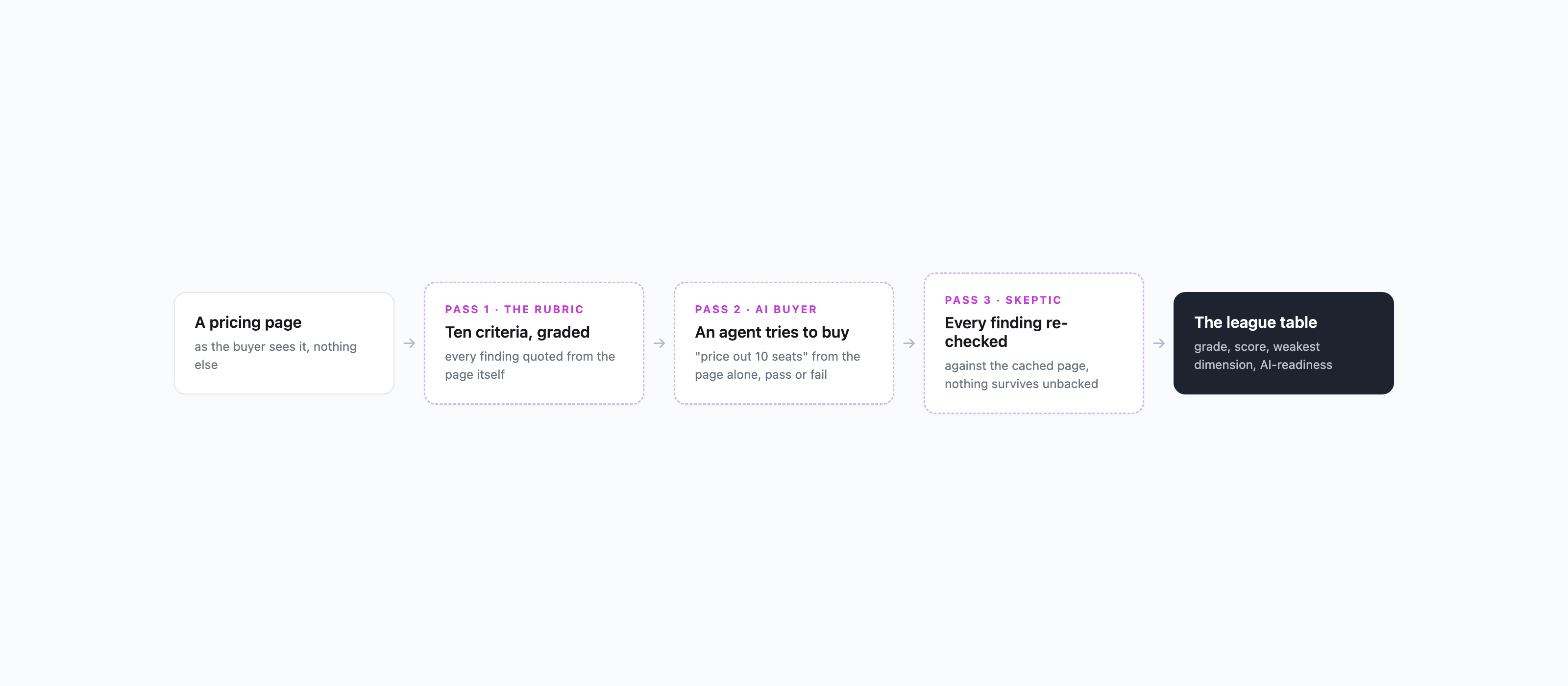
High-level diagram: pages graded, tested by an AI buyer, re-checked, ranked

Graded, tested by an AI buyer, re-checked before ranking
How it works
Takes the page list. One pricing page or twenty — the run works the same.
Grades every page. Ten dimensions, scored in parallel against a screenshot and the page text — every finding quotes the page.
Runs the AI-buyer test. An agent prices a 10-seat purchase from the page alone — pass or fail, with the quote it computed.
Re-checks the findings. A verification agent compares every finding against the cached page before anything is ranked.
Ranks the market. One table with a grade per company, plus a cited report on what the top pages do differently.
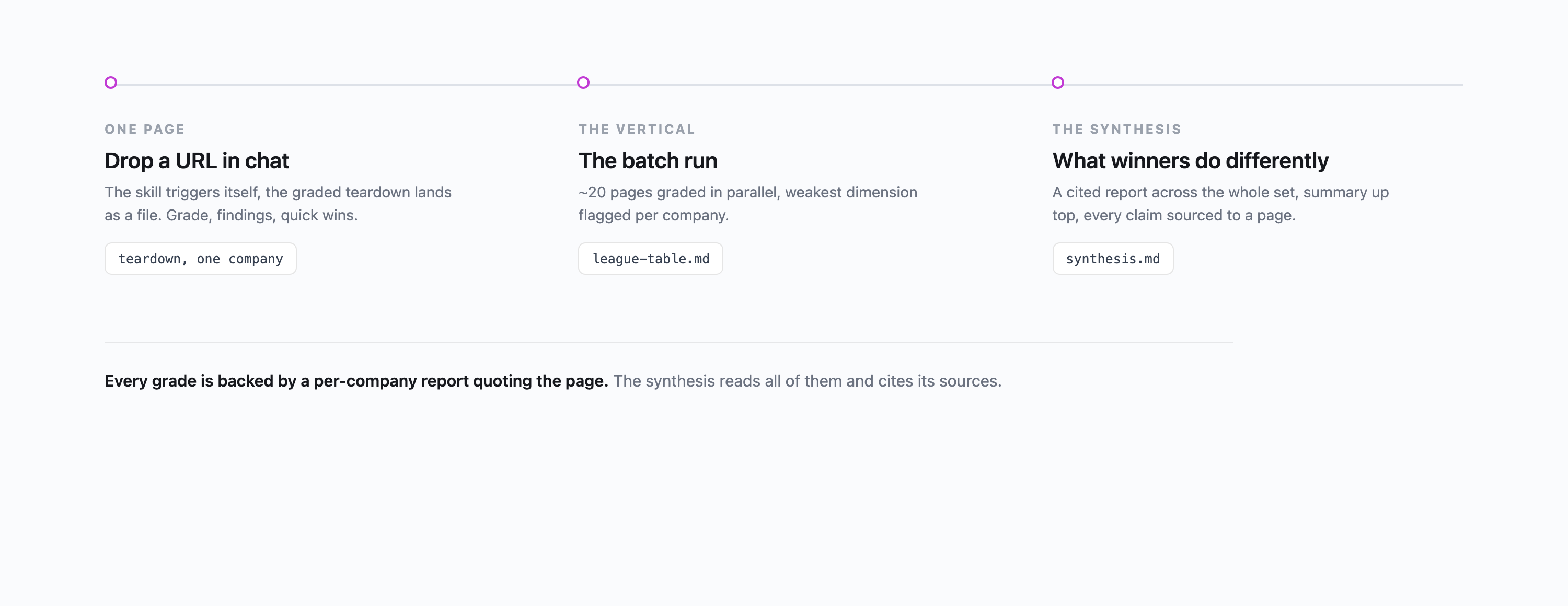
Step diagram: the same rubric at three scales

The same rubric at three scales — one page, the market, the synthesis

Example from a run
The market’s best-looking pricing pages all failed the AI buyer

From a run on 20 GTM tools — Clay, Apollo, HubSpot, Gong, and sixteen more. The pages a human would grade best all failed the AI-buyer test: their top tiers say “Contact sales,” so an agent pricing a 10-seat purchase leaves empty-handed. Mid-table Smartlead passed by publishing one computable number; Clay’s page produced a firm $2,004/yr quote.

Human polish and machine readability are different investments — most pricing teams are making only one of them. Each company’s report closes with its own fixes, quick wins first.

Report example
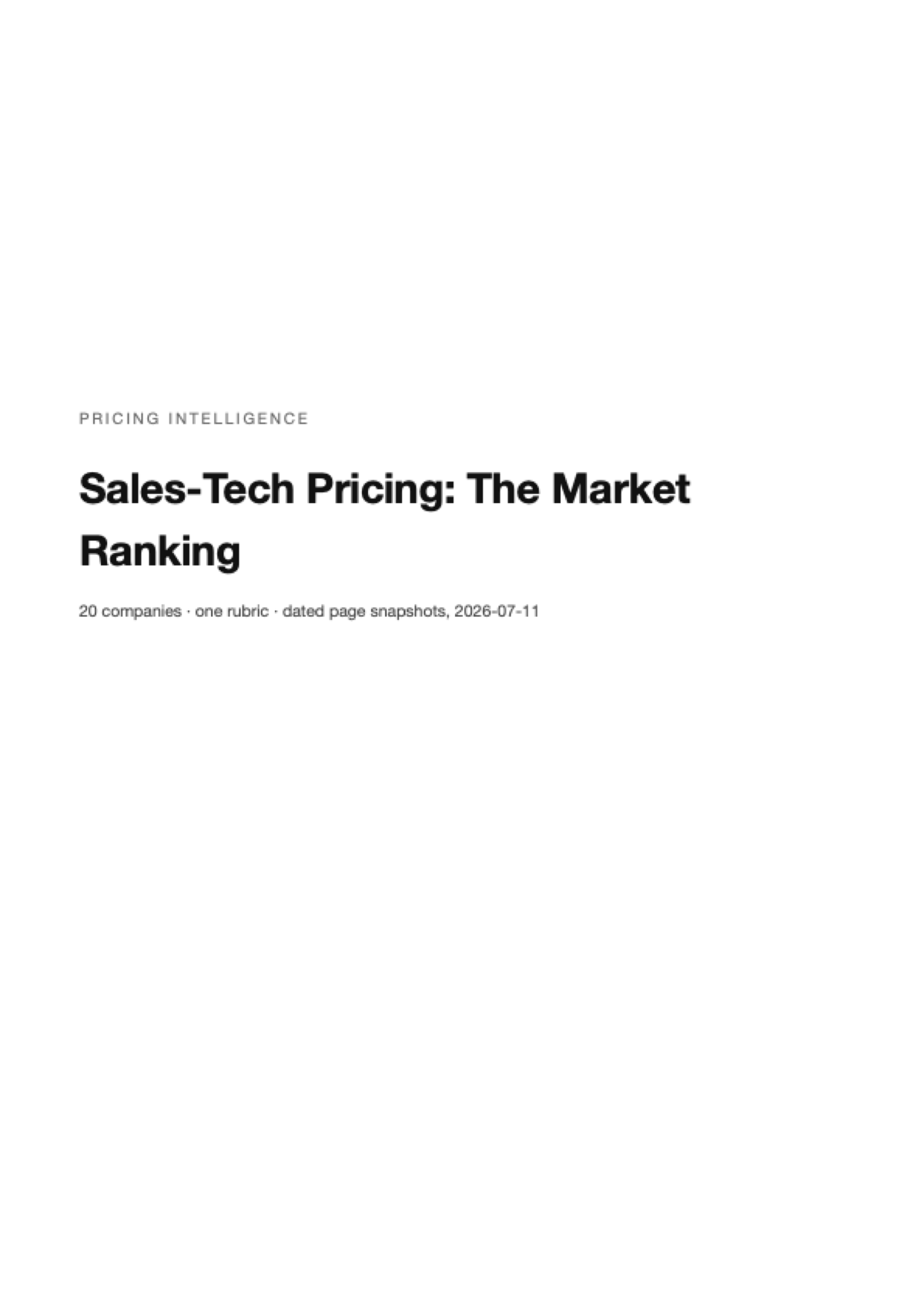
First page of the market ranking

The market ranking from the GTM-tools run — 20 companies on one table, with a per-company teardown behind every row and a cited cross-market report on top.

See the other builds

Competitive ads intelligence

Reads the LinkedIn, Meta, and Google ad libraries and writes a weekly report on what competitors changed.

View the build →

Automated style guide

Writes your style guide from your published articles and reviews every new draft against it.

View the build →

Adapted from the pricing-teardown and deep-gtm-research skills published by Kyle Poyar of Growth Unhinged. This rebuild adds the parallel market-scale run, the AI-buyer test, and a verification pass that re-checks every finding.